
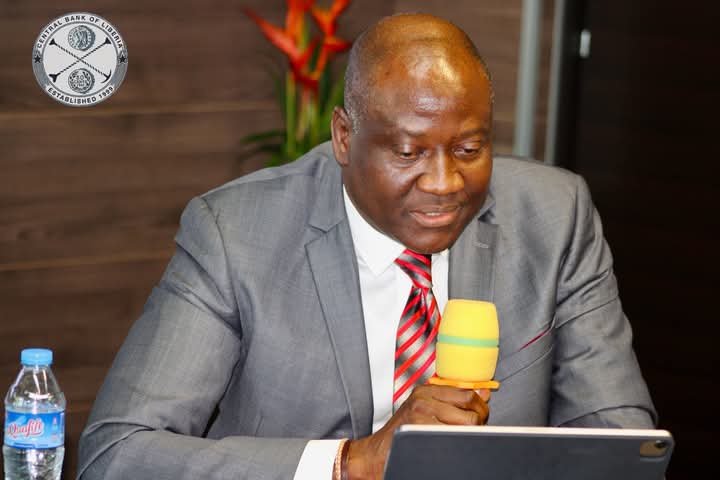
After a thorough analysis of domestic, regional, and international economic circumstance the Central Bank of Liberia (CBL) for the first quarter of 2026, is keeping it monetary policy rate at 16.25 percent, indicating confidence in containing inflation, enhancing economic expansion, and maintaining macroeconomic stability.
According to CBL Governor Henry E. Saamoi, the decision was made at the Monetary Policy Committee (MPC) meeting held on Monday, January 28, 2026, and was made public on Monday, February 2, 2026.
Saamoi, who read the communiqué said, the MPC indicated that Liberia’s inflation rate continued to fall more quickly than expected in the fourth quarter of 2025, averaging 4.4 percent, down from 5.9 percent in the previous quarter, with end-period inflation recorded at 4 percent adding that Liberia’s economy is projected to expand by 5.1 percent in 2025, an upward revision from the earlier estimate of 4.6 percent.
“The improved outlook is attributed to stable macroeconomic conditions, sustained fiscal spending, strong mining sector performance, resilient consumption demand, and increased private sector activity,” he added.
The CBL boss explained that economic growth remained resilient in the fourth quarter of 2025, with the International Monetary Fund estimating global growth at 3.3 percent for both 2025 and 2026. “While global inflation declined to an estimated 4.1 percent in 2025 and is projected to fall further to 3.8 percent in 2026, the Committee cautioned against persistent risks from geopolitical tensions, rising protectionism, debt vulnerabilities, and trade policy uncertainties.”
“Regionally, sub-Saharan Africa recorded the highest inflation at 13.3 percent during the period under review, though this is projected to moderate to 10.9 percent in 2026. The MPC emphasized that easing global inflation, alongside declining food and fuel prices, is expected to help contain domestic price pressures in Liberia,” the CBL boss stated.
He asserted that the banking industry stayed liquid, stable, and well-capitalized. Liquidity ratios were 50.1%, well over the statutory minimum, while total capital climbed by 3.9%.
Non-performing loans decreased drastically from 19.7 percent at the end of December 2024 to 12.58 percent at the end of 2025, according to Saamoi, however they were still above the legal threshold, suggesting persistent issues with asset quality. However, during the quarter, private sector credit increased by 3.8%.
In terms of the outside world, he said that Liberia had a merchandise trade surplus of 0.2 percent of GDP due to increased export revenue; gross international reserves increased by 3.8 percent to US$575.5 million, exceeding the IMF target; and remittance inflows rose to 4.1 percent of GDP, bolstering exchange rate stability.
CBL director continued that the Committee decided to keep the interest rate at plus 2.5 percent and minus 7.5 percent around the policy rate, maintain reserve requirement ratios at 25 percent for Liberian dollars and 10 percent for U.S. dollars, and maintain the monetary policy rate at 16.25 percent.
“The MPC reaffirmed its commitment to transparency, accountability, and evidence-based policymaking, noting that as stability is gradually restored, monetary policy focus will increasingly shift toward consolidating gains and supporting stronger real sector recovery for inclusive growth,” he said.
