
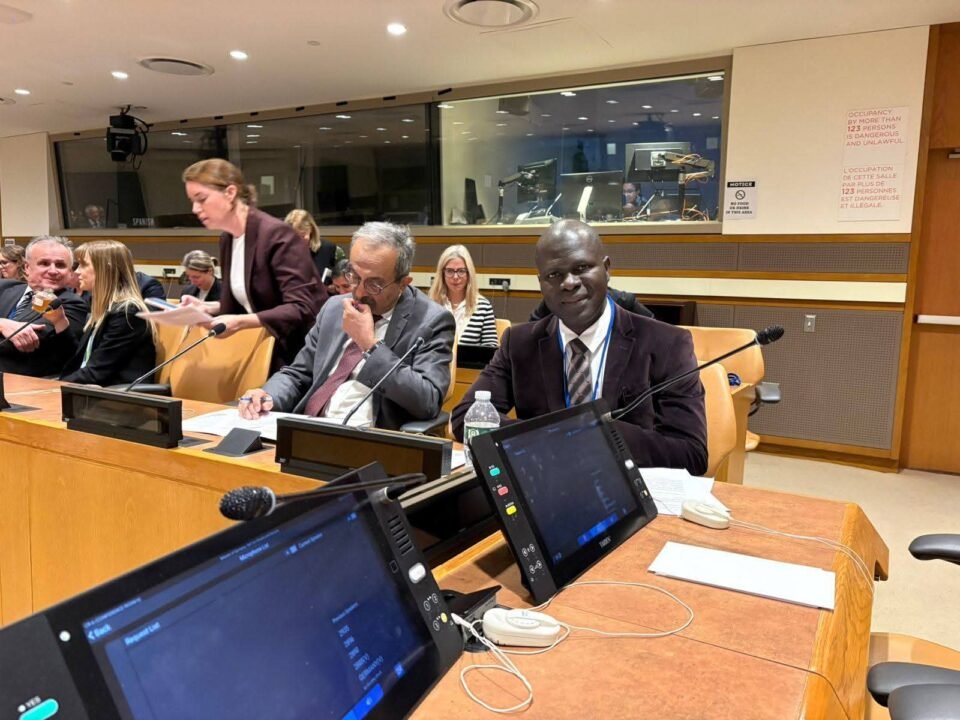
Liberia has cautioned at the UN headquarters that climate change poses a major threat to peace and security in addition to being an environmental problem.
Dr. Emmanuel K. Urey Yarkpawolo, the Executive Director of the Environmental Protection Agency, told members of the Group of Friends on Climate & Security during the delivery of Liberia’s national statement on March 26, 2026, that the nation is already feeling the effects.
He claimed that many individuals are being forced from their houses due to severe coastline erosion and rising sea levels. He claims that this condition is causing conflict in communities and having an impact on livelihoods.
He clarified that when people lose their houses and land, they frequently relocate, which causes conflicts over resources and land. He pointed out that if these tensions are not managed well, they may escalate into more serious disputes.
Dr. Yarkpawolo also discussed the region as a whole, particularly the Sahel, where extended dry seasons and unfavorable farming circumstances are driving young men south in quest of a better life. He listed Burkina Faso as one of the nations from which a large number of migrants originate.
According to him, some of these migrants are going into Liberia’s forests to cultivate crops like cocoa. Although this aids in their survival, it increases the strain on the land and woods and occasionally creates issues for nearby towns.
The head of the EPA stated that Liberia is attempting to solve the issue despite the difficulties. He discussed initiatives that support youth employment while preserving the environment. These include community peace initiatives, mangrove restoration, and eco-brigades, claiming that by doing so, individuals are becoming more trustworthy and less tense.
Liberia is also attempting to link peacebuilding with climate efforts. According to Dr. Yarkpawolo, efforts along the shore today include protecting the environment, rehabilitating it, and helping the locals.
He urged the international community to provide financial and technical assistance to nations like Liberia. Strong alliances and climate funding, he argued, are essential to averting future hostilities adding that Liberia is prepared to collaborate with partners to turn things around.
