
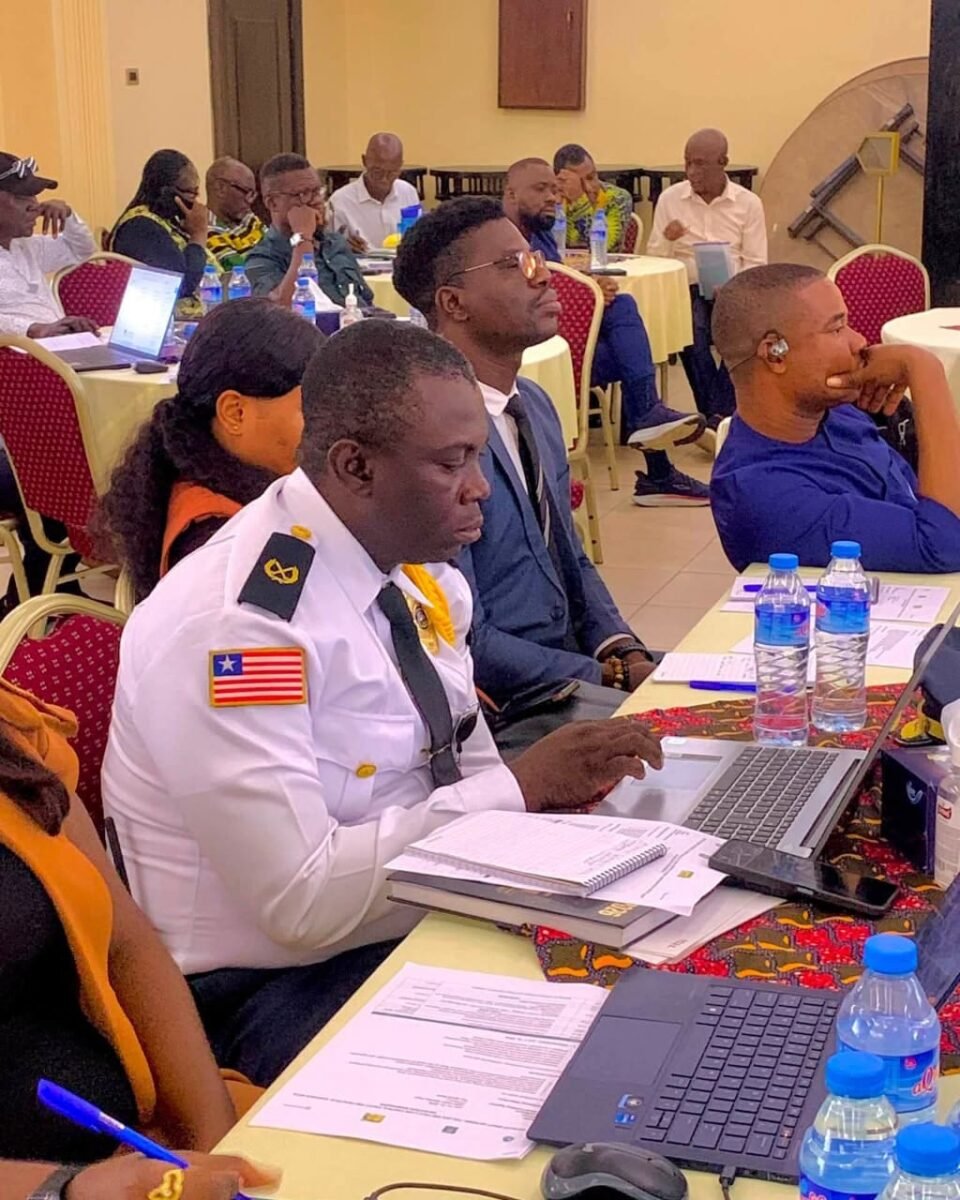
In an effort to prevent roads and bridges from rapidly deteriorating, the Traffic Section of the Liberia National Police (LNP) has advocated for increased law enforcement agencies’ participation in the development and execution of regulations.
Assistant Commissioner of Police (ACP) Alphanso D. Bindah, representing the Traffic Section at the National Validation Workshop with the theme “An Act to Establish an Axle Load System to Protect Public Roads and Bridges from Rapid Deterioration and Destruction,” highlighted the vital role that the Liberia National Police play in guaranteeing efficient axle load enforcement throughout the nation.
Speaking during the discussions, ACP Bindah emphasized that strategic decision-making procedures pertaining to axle load control policies and public road management should involve the Liberia National Police. He pointed out that the LNP is a crucial player in safeguarding the country’s infrastructure because of its practical experience in traffic management and enforcement.
Additionally, he pushed for increased focus on remote areas, requesting the legislators to make sure that road safety and development plans cover neglected areas of the nation in addition to urban areas.
ACP Bindah informed that road safety, infrastructure sustainability, and national economic growth would all be improved by inclusive planning and more stakeholder participation.
ACP Bindah reiterated his dedication to public service and promised to continue supporting programs led by Inspector General of Police Gregory O.W. Coleman that advance the rule of law and safe traffic control.
The National Validation Workshop is a component of the government’s and development partners’ continuous efforts to improve axle load management systems and protect Liberia’s road network from damage brought on by overloaded vehicles.
The Axle Load Act, which was issued by the Ministry of Foreign Affairs and adopted on October 23, 2015, was examined at the workshop. The results of the Consultancy Team, the goals of the project, and the larger background of Liberia’s economy and road sector development were the main topics of discussion.
The main issues affecting the country’s transportation infrastructure, such as persistent underfunding of road maintenance, climate-related vulnerabilities of road assets, inadequate axle load enforcement mechanisms, and institutional and capacity-building limitations, were also discussed in detail by the participants.
